
At the Crossroads of Empires: A Glimpse Into Bukharian, Kavkazi, and Georgian Jewish Worlds
Our friends at New Lehrhaus present:
At the Crossroads of Empires: A Glimpse Into Bukharian, Kavkazi, and Georgian Jewish Worlds
Join Ruben Shimonov, Tashkent-born artist and educator, for a three-session exploration of the rich histories, traditions, and cultural identities of Bukharian, Kavkazi (Mountain), and Georgian Jewish communities, tracing their journeys from Central Asia and the Caucasus to Israel, New York, and beyond.
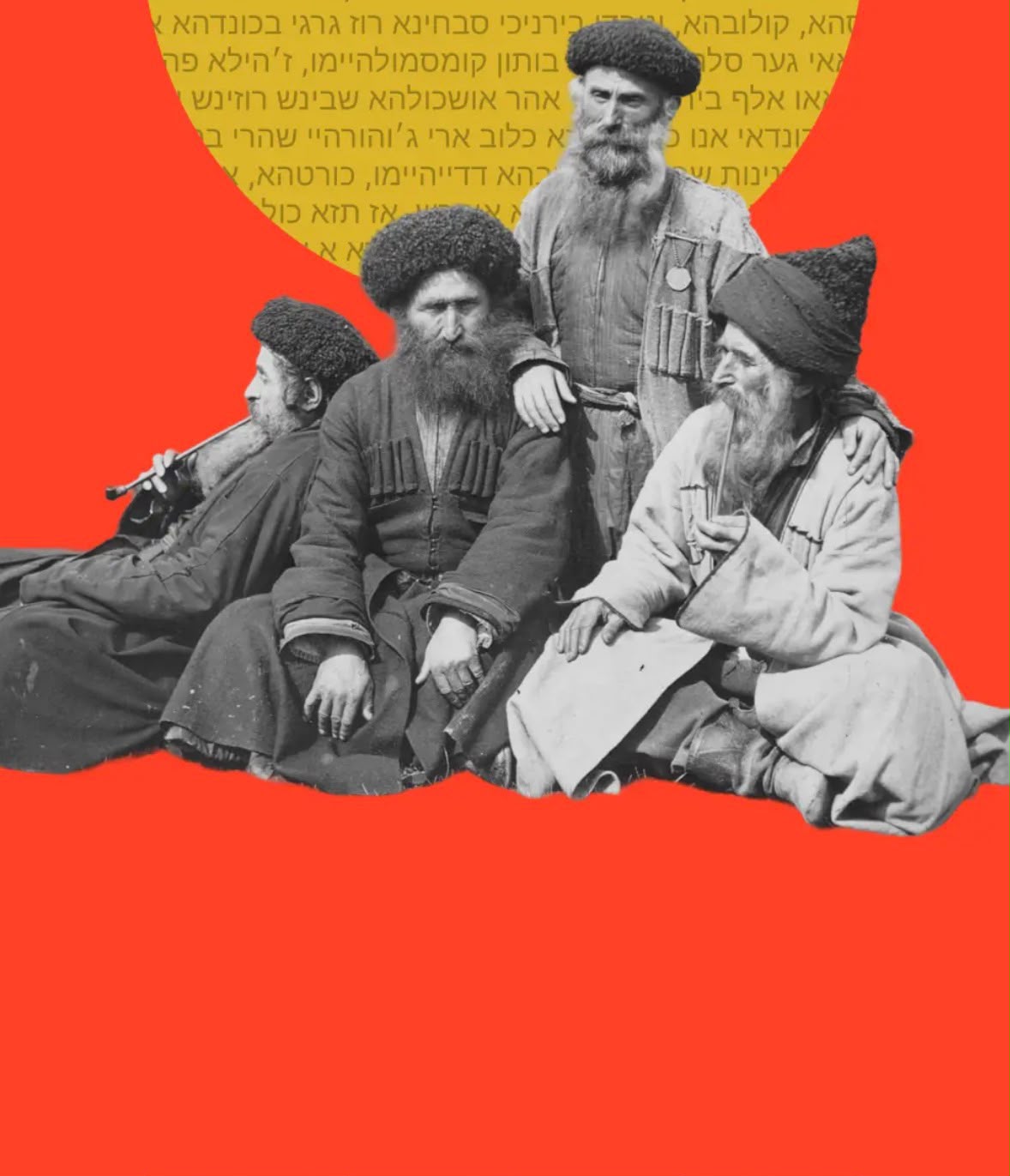
In the cities of the Silk Road and the mountains and valleys of the Caucasus, Jewish communities created lasting cultures shaped by centuries of exchange with the civilizations around them. Persian-speaking Jews of Bukhara and Samarkand, the Kavkazi (or Mountain) Jews of Azerbaijan and Dagestan, and the ancient Jewish communities of Georgia show how diverse and interconnected Jewish life has been.
All three communities carry stories of cultural encounter, religious change, and continuity. Bukharian Jews developed a literary and musical tradition in Bukhori, a Jewish variety of Persian. Kavkazi Jews kept their Juhuri language and their own traditions among the many cultures of the eastern Caucasus. Georgian Jews trace their roots to deep antiquity and maintained a Jewish identity closely bound to the Georgian language and culture. All three lived in constant contact with their neighbors: Bukharian religious practice was profoundly influenced by Sephardic and Mizrahi tradition; Persian, Turkic, and Caucasian influences left their marks on daily life; and Russian and Soviet rule transformed all three communities.
Join Tashkent-born artist and educator Ruben Shimonov for a three-session exploration of these interwoven histories. Drawing on historical documents, photographs, music, and personal stories, Ruben will trace each community’s religious traditions, languages, cultural expressions, and migrations, from their historic homelands to the diasporas of Israel, New York, and beyond.
Along the way, we’ll take up larger questions: how Jewish identities change across languages and civilizations, how traditions travel and adapt, and where these communities sit among the sometimes overlapping, sometimes contested boundaries of Sephardic, Mizrahi, and Russian-speaking Jewish life.
Who this is for:
- Those interested in the Jewish histories and cultures of Central Asia and the Caucasus
- Anyone drawn to the intersections of Jewish, Persian, Turkic, Georgian, and Russian cultural histories
- Those interested in the complexities of Sephardic, Mizrahi, and Russian-speaking Jewish identities and diasporas
What you’ll leave with:
- A richer understanding of the histories and distinctive cultural traditions of Bukharian, Kavkazi, and Georgian Jews
- An appreciation of their languages, music, religious practices, and the cultural exchanges that shaped them
- New perspectives on Jewish identity, migration, and the enduring connections between communities across continents
On Tuesdays, 9:00–10:30 PM ET:
10 November
Session 1
17 November
Session 2
24 November
Session 3
Online Course | Three Sessions
Registration: $54
New Lehrhaus Member Price: $18
Register Now!
Ruben Shimonov is an educator, community builder, and artist from Uzbekistan dedicated to Jewish diversity and intercultural understanding. He serves as national director of education & Sephardi House at the American Sephardi Federation and is the founding executive director of the Sephardic Mizrahi Q Network. Through his teaching, writing, and multilingual Hebrew-Arabic-Persian calligraphy, he explores the histories, cultures, and traditions of Sephardic and Mizrahi Jewish communities. He has lectured at universities, museums, and conferences worldwide and recently concluded an artist residency and visiting lectureship at the Tuohy Center for Interreligious Understanding at John Carroll University.