An Eastern Cosmopolitan Sound from the Negev Desert: Gad Tidhar’s Israeli Oud Tapestry
In Memory of Distinguished ASF Board Member Norman Belmonte, A”H, an entrepreneur who realized the American dream after his family’s difficult and years-long journey from Edirne to the USA, a lover of music and Sephardic history, as well as a philanthropist whose Mitrani Family Foundation supported ISEF, the ASF, and many Sephardic causes, including the ASF’s exhibit, “The Historic Synagogues of Turkey,” at Topkapi Palace Museum in Istanbul. We are grateful for his decades of dedicated service to the American Sephardi community. Ke su alma repoze en Gan Eden.
Click here to dedicate a future issue in honor or memory of a loved one

Upcoming Events ◊ ASF Sephardi Shop ◊ Sephardi World Weekly ◊ ASF Sephardi House ◊ Archive◊ Donate
TheAmerican Sephardi Federation’sSephardi Ideas Monthly (SIM) by Dr. Aryeh Tepper is a continuing series of essays and interviews from the rich, multi-dimensional world of Sephardi thought and culture that is delivered directly to your inbox.
This month’s issue of Sephardi Ideas Monthly continues our mini-series, “Uniting East and West: An Israeli Musical Dream”
An Eastern Cosmopolitan Sound from the Negev Desert: Gad Tidhar’s Israeli Oud Tapestry
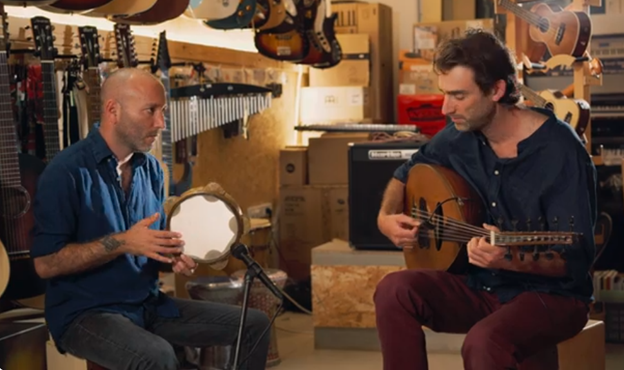
Gad Tidhar’s music is rooted in fidelity to the modal traditions of Persia, the Arab world, and Turkey, and to the southern Negev desert that he calls home. Weaving these elements together, Tidhar’s eastern cosmopolitan sound is an Israeli act of unification, integrating distinct modal worlds into a single desert‑honed imagination.
Born in 1983 and first trained on guitar, Tidhar turned decisively toward the oud in his early twenties, using the instrument as his gateway into maqam-based music. Over the following decade he studied with tar virtuoso Piris Eliyahu, oud master Nizar Rohana, and the transcendence-seeking musical polyglot Ross Daly, while completing formal work at the Jerusalem Academy of Music and Dance under Dr. Michael Maroun. The result: rhythmically punctuated Arabic phrasing in the right hand and dancing Turkish filigree in the left, while the whole body moves within Persian atmospheric dynamics. The cultural languages serve as complementary colors on a single desert‑tuned palette, not genres lost in their “fusion.”
Tidhar lives surrounded by the desert silence of Mitzpe Ramon. Located a little more than an hour south of Be’er Sheva and sitting along the northern rim of the massive, Mars-like Ramon crater, Mizpeh Ramon (pop. 6,000) is home to a small but thriving arts scene: visual artists working in modest studios and galleries scattered through the town; a lively music culture anchored by the Mitzpe Ramon Jazz Conservatory and its club; and an assortment of desert photographers, sculptors, and artisans who treat the crater and surrounding cliffs as an open-air workshop. At the moment of this writing, with air raid sirens scorching local soundscapes, Israelis are fleeing to Mizpeh Ramon for the silence.
In this nurturing environment, Tidhar has built a career that integrates performance, composition, and the desert. His ensemble work is central to his reach. The Faran Ensemble, which he co‑founded with Roy Samila and Raphael Ben‑Zichri, and named after a Negev desert wadi, is one of the most successful Israeli world‑music acts of recent years. The trio’s acoustic, maqam-rooted sound travels far beyond Israel; their most popular video has fourteen million views, a striking number for instrumental art music rooted in Persian, Arab, and Turkish modal traditions first cultivated by urban elites centuries ago. Alongside Faran, Tidhar has released two solo albums – Baharim (2017) and The Observer (2024) – where extended modal pieces develop through dynamic shading rather than virtuosic display. He has also recorded with Tal Yam on the riqq drum, extending Tidhar’s modal language into new rhythmic textures.
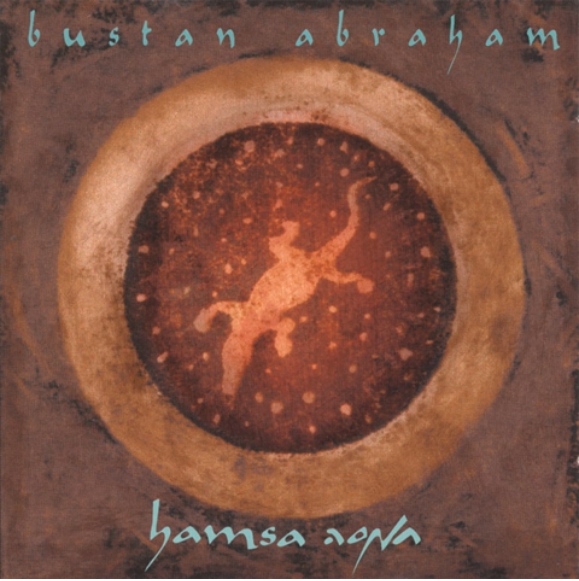
Tidhar’s sound sits within a distinctly Israeli lineage of what is sometimes called, with great imprecision, “world music” or “ethnic music.” Beginning with Yisrael Borochov’s East-West Ensemble in the 1980s, continuing through Bustan Abraham in the 1990s, and extending into the present in a robust variety of forms, Israeli musicians have been integrating western and eastern sonic modalities. Tidhar extends that lineage by separating the eastern elements into distinct regional sounds that, with western freedom, he reimagines in the Israeli desert soundscape.
For listeners willing to follow him into the desert, Tidhar’s music offers a cosmopolitan sensibility in an eastern mode that is thoroughly Israeli.
Sephardi Ideas Monthly: Gad, please take us back to the moment when your musical horizon expanded.
Gad Tidhar: It began for me with the band Bustan Abraham. I heard them in a live setting, with their mix of Eastern classical music, Western elements, different grooves and kinds of improvisation, and I felt that the music was at once local and expansive. I loved what I heard, but I was hesitant, because I didn’t yet understand where these sounds would take you. The emotions in the music are deep.
SIM: What in Bustan Abraham’s sound spoke to you?
GT: They sounded to me like they were from here, that they weren’t trying to be something else. At the time I didn’t even know the word maqam. I just felt that the music grew out of the ground in this place, like it belonged to the landscape and the people. That feeling, that something can be both sophisticated and completely rooted, is what pulled me toward Eastern music and eventually to the oud.
SIM: On the very day you finished your army service, you bought an oud. Was it really that immediate?
GT: Yes, it was that direct. On the day I was released from the army, I went and bought an oud. It was like finally giving myself permission to follow the sound that I had been hearing. I didn’t know yet how to play, and I certainly didn’t know where it would lead in terms of career, but I knew the instrument was the doorway into the modes and emotions that I heard.
SIM: Around the same time you were drawn to the desert itself. How did the Negev become so central to your life and music?
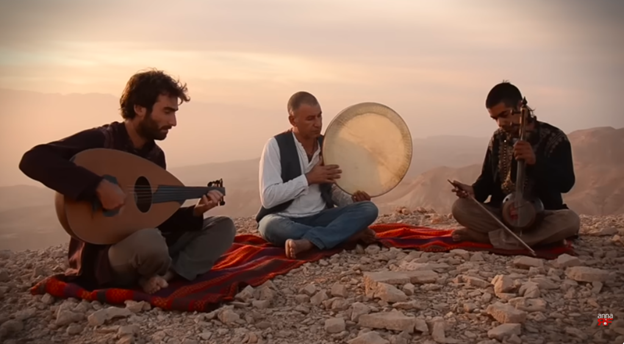
GT: I’ve always been attracted to the desert, to the life of the desert, even to camels. After the army I moved to Shaharut, a small community in the far south, about forty kilometers north of Eilat. The women from A-Wa are from there. Ro’i Samila is from there. He’s a kamanche player who together with Ofir J. Rock founded the band anna RF. They pushed so‑called world‑music much further toward electronic production and reggae influences, and have been very successful internationally. Ro’i is a member of the Faran Ensemble today. That move south was not just a change of address, it was a decision to let the desert become my home, walking there, living there, feeling the light and listening to the silence, all of it…
SIM: How did your formal studies begin? Where does Piris Eliyahu enter the story?
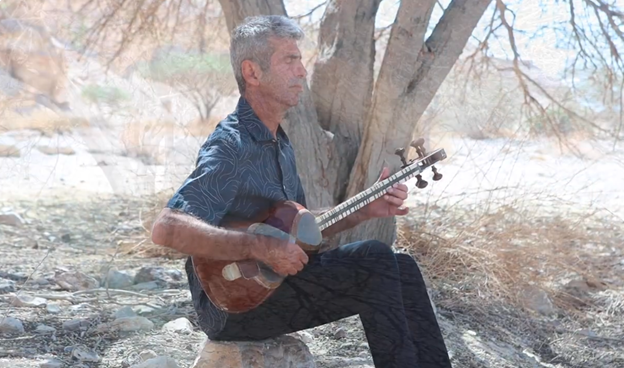
GT: At a certain point I learned that Piris Eliyahu was living in Arad, another city in the south, and that he offered both personal and group classes. I went to study with him, and his teaching became a major pillar for me. With Piris we worked on Persian, Arabic, and Turkish music, but from a Persian center of gravity, Persian dastgah, or maqam. He had this system where, when you reached a certain level, you got to play with the group. It created a small “school” feel: you learned the repertoire, you internalized the modes, and then you entered a communal sound.
SIM: For readers who may not know Persian music: what does it mean to study dastgah with him?
GT: Each dastgah is a modal world that includes a repertoire of short, fixed melodies called gūsheh. In performance, you move through selected gūsheh within one dastgah, improvising and composing inside that framework. So the dastgah functions a bit like a raga in Indian music, or like a family of modes in Arab and Turkish maqam traditions. When you’re playing a gūsheh, a melodic fragment, you’re concentrating on that area of the mode and exploring it deeply until you naturally reach a new note, a new region. The melody flows within the groove; you’re discovering micro-landscapes inside the map.
SIM: After that, you sought out Nizar Rohana. What did he add to your formation as an oud player?
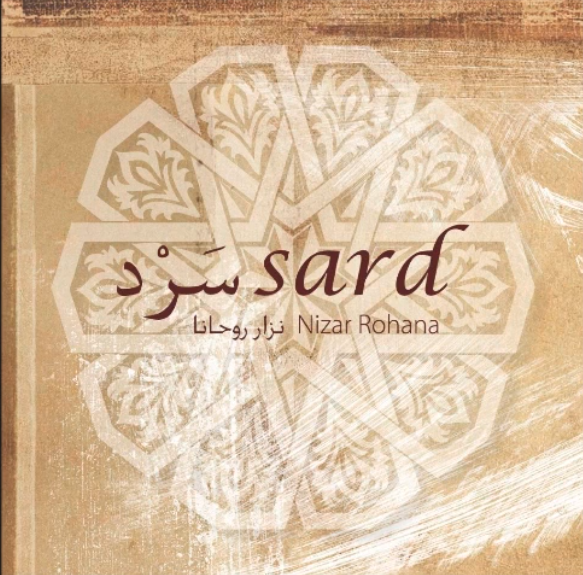
GT: I went to Nizar because I wanted to deepen my relationship with the oud itself and with Arabic and Turkish maqam. He’s a Palestinian teacher known for combining very high‑level virtuosity with contemporary composition while keeping an idiomatic oud language. With him I didn’t just learn pieces; I learned a way of thinking with the instrument. He has taught extensively, and I was lucky to be one of his students. A lot of my right‑hand approach – how to treat the oud as both a melodic instrument and drum – was refined with him.
SIM: You often describe your right and left hands as belonging to different “worlds.” Can you unpack that?
GT: When I play the oud, my right hand is “Arab.” The oud is a kind of drum; your sound depends on how you hit the strings. The speed and the notes are always in the service of the groove, the rhythm, the pulse of the piece. My left hand is “Turkish,” which for me means a kind of virtuosity that makes everything easy and light and playful. So the right hand gives weight, earth; the left hand gives agility and ornament, dance. Together they create a balance that feels natural to me.
SIM: You teach students from different traditions. How do you introduce them to such a layered modal world without overwhelming them?
GT: When I teach different musical traditions, the entrance into each one is through rhythm. If you feel the rhythm of a samai, or a maqam, or a Persian dawr, your body already knows something about the mood of that mode. From there, the pitches and phrases are not abstractions; they’re ways of coloring a groove that you already inhabit. So we start with rhythm and only then talk about scales.
SIM: Does that mean rhythm is the primary organizing principle, even more than the modal hierarchy itself? And are there maqamat that resist that entrance?
GT: Rhythm is more of a gateway into a particular culture, a way of understanding its accent. It’s not necessarily the gateway into the maqam system itself. Some maqamat live closer to the rhythmic pulse; others open more through melody, or through a specific ornament, or through silence. But rhythm is where I start, because it gets the intuition involved before the mind starts reflecting.
~~~~~~~
A Pizmonim: Sephardic-Hebrew Songs of the Middle East, Volume 1
by David Elihu Cohen
Pizmonim, a unity of poetry and song, have been an integral part of the Jewish People and may be traced in the Bible to the very beginning of our history.
The twelve selected Pizmonim contained in this booklet serve to perpetuate the Greater Sephardic culture and tradition of singing praise to the Lord on all joyous occasions.
Matzah and Flour: Recipes from the History of the Sephardic Jews
by Dr. Hélène Jawhara Piñer
A collection of 125 meticulously crafted recipes showcasing the enduring flavors that define Sephardic culinary heritage.
Matzah and Flour: Recipes from the History of the Sephardic Jews offers a tantalizing exploration of the central role of matzah and flour in Sephardic cuisine. Journey through centuries of tradition as flour, from various grains like chickpea, corn, and barley, intertwines with cultural narratives and religious observance. Delve into the symbolism of matzah, from its origins in the Exodus story to its embodiment of resilience and identity. Each of this cookbook’s thoughtfully prepared recipes is a testament to the transformative power of flour in Sephardic culinary heritage. From savory delicacies to sweet delights, these timeless flavors have sustained Sephardic families through history. Matzah and Flour is a celebration of tradition, history, and the enduring legacy of Sephardic Jewish cuisine.
~~~~~~~

The 28th New York Sephardic Jewish Film Festival
May 31st – June 7th 2026
Celebrating Sephardic Jewish Creativity in the Spirit of America’s 250 Years of Freedom
For more than 500 years in the Americas and since the earliest days of the Republic, Sephardic Jews have contributed to the civic, commercial, and cultural life of the United States. As America marks 250 years of independence, we celebrate the freedom that allows creative voices from across the Sephardic diaspora to flourish.
Screening 11 Premiere Films
(International, North American, US, and NY)
Enrico Macias joins us to celebrate the Pomegranate Award Honorees, remarkable artists from the United States and across the Greater Sephardic world.
WWW.NYSJFF.COM
Venue: The Museum of Jewish Heritage, 36 Battery Place, NYC
~~~~~~~
Upcoming Events or Opportunities
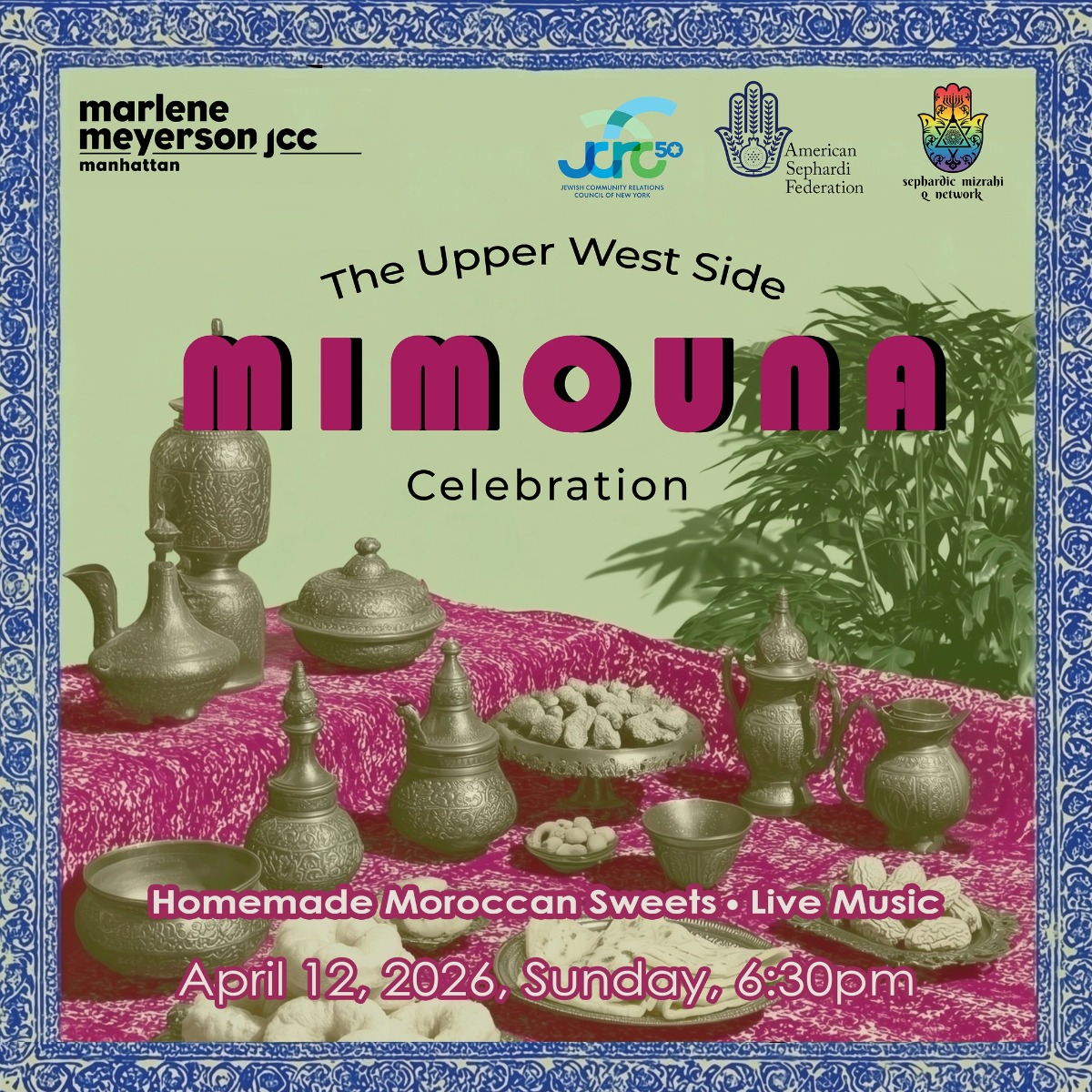
Our friends at JCRC-NY in partnership with the American Sephardi Federation, the Sephardic Mizrahi Q Network, Marlene Meyerson JCC Manhattan present:
Upper West Side Mimouna Celebration
“Celebrate the vibrant conclusion of Passover at the Upper West Side Moroccan Mimouna! Enjoy an unforgettable evening of music, food, and tradition, featuring the enchanting sounds of Layali El Andalus. Indulge in a rich and colorful Mimouna table, overflowing with handmade sweets, traditional mufletas, and refreshing Moroccan mint tea.”
Sunday, 12 April, at 6:30PM EST
@The Marlene Meyerson JCC Manhattan (MMJCCM)
334 Amsterdam Ave at 76th St, NYC
Sign-up Now!
Tickets: $50
About this Event:
Layali El Andalus breathes new life into the musical traditions of Morocco, Andalusia, North Africa, and the Middle East. Founded by Moroccan-born musician Rachid Halihal (singer, oud, violin.) Layali El Andalus has graced prestigious music festivals and concert stages across the United States and abroad, with notable performances at MoMA and Lincoln Center.
~~~~~~~
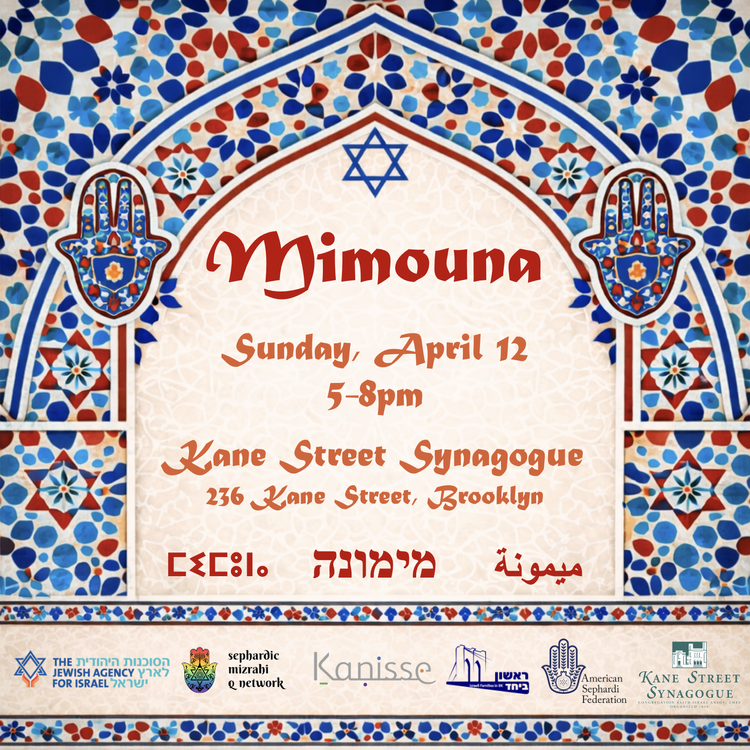
Our friends at Kanisse in partnership with the American Sephardi Federation, Kane Street Synagogue, and the Jewish Agency for Israel present:
Mimouna 2026
“At the conclusion of Passover, Moroccan and other North African communities traditionally host a Mimouna, a neighborly celebration marking the return to consuming leavened products while eating symbolic foods to bring good luck in the coming year.
This year Kanisse is thrilled to be partnering with Kane Street Synagogue and the Jewish Agency for Israel to celebrate Mimouna across the larger Jewish community. The evening will include a special performance of Electric Mimouna, a project blending Moroccan Arabic and Hebrew songs, reimagined covers, and biblical texts in a joyful, live music experience by artists Chanan Ben Simon and Guy Barash.
Reconnect after Passover with old friends and new, explore the traditions of the Moroccan Jewish community, and enjoy moufleta (Moroccan dessert crepes) along with other holiday delicacies in this epic celebration!”
Sunday, 12 April, 5:00 – 8:00PM EST
@Kane Street Synagogue
236 Kane Street, Brooklyn, New York 11231
Childcare, including Mimouna-themed activities, will be available from 5:00–6:30 PM, led by JAFI’s shlichut volunteer team.
Sign-up Now!
Tickets: $25
Registration is on a first-come, first-served basis.
~~~~~~~
Our friends at 14th Street Y in partnership with the American Sephardi Federation present:
Kedmah Song Circle
“Join Yosef Goldman and Josh Kaye for an immersive evening of Middle Eastern Jewish poetry and song. Each month from January to May, we’ll delve into a single piyyut – a sacred Jewish poem – learn its melodies, and discover the stories and contexts that shaped it. Come sing, learn, and connect in community. All are welcome.”
On Mondays at 7:00PM EST
27 April
18 May
In-Person @ 14th Street Y
344 East 14th Street, NYC
Sign-up Now!
Tickets: $18
About the Event:
“Kedmah is a musical and educational collective devoted to Mizrahi Jewish poetry and song. Through teaching, performance, and communal singing, Kedmah invites participants to experience the vitality of sacred poetry that has shaped Jewish life across generations.
Yosef Goldman is a composer, vocalist, and spiritual artist drawing on Mizrahi and Ashkenazi devotional traditions to create transformative musical experiences. He co-founded Kedmah and serves as senior advisor to Hadar’s Rising Song Institute. His work has been featured at the Kennedy Center and Kimmel Center. As a rabbi and ritual artist, Yosef leads prayer and teaches sacred music across the spectrum of Jewish life.
Josh Kaye is a guitarist, oud player, and award-winning composer. He performs across the U.S. as a member of the Stephane Wrembel band and leads the Middle Eastern fusion project, Baklava Express. Josh has performed at venues such as The Town Hall, Dizzy’s Club, Blue Note, Symphony Space, and Lincoln Center.”