
תזכו בנחמת ציון ובבניין ירושלים
From your friends at
The American Sephardi Federation
In honor of Tish’a B’Ab, the ASF’s Sephardi World Weekly is pleased to offer the following “Letter from the Land of Israel”:
On the 9th of Ab, Jews mourn the destruction of the first and second Temples in Jerusalem by reciting lamentations and fasting for twenty-five hours. It’s not an easy day, and it commemorates an institution—the Temple—that, to be honest, means little to nothing for most Jews today. While holidays such as Hanukkah and Passover are observed by Jews of various stripes, the 9th of Ab has become the exclusive purview of traditional Jews.
It should also be noted, however, that the Rabbinic Sages included other events to the list of remembrances on Tish’a B’Ab, beyond the destruction of the Temples. One of those events was the Biblical Sin of the Spies, a reconnaissance mission to the Land of Israel gone wrong, when the children of Israel, despite all the miracles they had witnessed during the Exodus from Egypt, lost hope that God would help them enter the Land. As a consequence of this failure of nerve, the generation of the Exodus was condemned to wander in the desert for another thirty-eight years before passing away. The children of Israel cried the night after the Sin of the Spies, the 9th of Ab, and, according to the Talmud, there was something fundamental to those tears: God responded that they cried one night, but the 9th of Ab would become a time of tears for generations to come.
What was so fundamental about the Sin of the Spies that its traces can be felt throughout Jewish history? The Chief Rabbi of Salonika (1921-1923) and first Sephardi Chief Rabbi of Israel, Hakham Rabbi Ben-Zion Meir Hai Uziel (1880-1953), offers an intriguing answer to that question in an extended essay, Beyn Ha’Meytsarim (“The Three Weeks”), in which he treats the 9th of Ab. R’Ouzeil’s answer revolves around an idea that is central to his thought, in general, and that animates his understanding of Jewish texts and history, in particular. What’s more, his answer offers a fresh look at the 9th of Ab that re-embeds the day in a broadly national-humanistic context.
The idea that is central to R’Uziel’s thought is rooted in the Hebrew word te’udah, which R’Uziel uses as a leading term and theme throughout his writings. It’s a slightly archaic word that in contemporary Hebrew usually means “certificate” or “diploma,” but that in R’Uziel’s time meant purpose, or aim.
R’Uziel uses te’udah in various contexts. For instance, he writes that the personal and national lives of all human beings are ennobled and intensified by focusing on one’s te’udah, or purpose, while not focusing on a te’udah, “leads to destruction and degeneration.” What is that fundamental, human purpose? In a remarkable passage, R’Uziel writes that, “Humanity’s purpose (te’udat ha’adam) is not found in its complete form except for when it is linked to the world of scientific, artistic, economic and aesthetic activity, when they are done for the sake of heaven.” It would be difficult to find a clearer statement of classic Sephardi humanism than this religiously inspired call to excellence in various fields of endeavor.
Continue reading…
~~~~~~~

“We have to unite our energies together. All Jews, together… If we are united, all Sephardim & also Ashkenazim, together… we will see the light!”
~Enrico Macias
Donate to the ASF now and your generous, tax-deductible contribution will support the ASF’s stand for Jewish unity rooted in the classic Sephardic tradition. The ASF’s Institute of Jewish Experience is uniquely dedicated to ensuring that today’s Jews know our history; appreciate the beauty, depth, diversity, and vitality of the Jewish experience; and have a sense of pride in Jewish contributions to civilization. And the ASF’s Sephardi House Fellowship is infusing Jewish life on campuses coast-to-coast with the wisdom and warmth of Sephardic philosophy, poetry, spirituality—keys to resisting and defeating antisemitism.
~~~~~~~
An additional aspect of R’Uziel’s use of te’udah is the range of its applications. When giving an account for the reasons for the Torah’s commandments, R’Uziel includes te’udahas a separate category, meaning that there is a class of commandments whose rationale is to remind us of Israel’s te’udah, or purpose. Likewise, R’Uzeil uses te’udah as an interpretive key for exploring passages in the Bible and in rabbinic writings. He also uses te’udah to discuss character development, including an extraordinary account of the positive aspect of the desire for honor:
The love of honor that inheres in the soul of man reflects his purpose (te’udato) in life: to ascend to the level that is fitting for honor and glory. The love of honor awakens in us the desire and craving to make ourselves into honorable people through true knowledge, as well as activities and character attributes that are honorable in the eyes of the world. The greatest blessing in life that God gave to man was his aspiration for honor.
R’Uzeil’s positive evaluation of the desire for honor is unique in the Jewish tradition, but it is consistent with his worldliness and intense religiosity: nothing is to be denied because everything can be ennobled by its use in the service of God.
Unsurprisingly, te’udah is also central to R’Uziel’s interpretation of the 9th of Ab. In exploring the meaning of the day, R’Uziel begins by identifying the foundation of national flourishing, as he writes,
The building of the nation stands on three things: acknowledging the national purpose (te’udah)…; connecting actions to the realization of the national purpose (te’udah)…; [and] having a homeland and independent state that function as a field for creative work and a framework for growth.
Likewise, national decay and destruction are rooted in neglecting these three principles: “If you see the nation in its ruin, go and check each one of these principles, and you will find the reason for the destruction.” The most fundamental principle is the first item on the list, acknowledging Israel’s national purpose, while the archetypical example of Israel forgetting its national purpose was, according to R’Uziel, the Spin of the Spies.
The crucial element in R’Uziel’s interpretation of the Sin of the Spies is a nightmarish fantasy that took hold of the people’s imagination when they doubted their ability to enter the Land. As Moses retells the story in Devarim/the Book of Deuteronomy (1:27): “You grumbled in your tents and said, ‘The LORD hates us; so he brought us out of Egypt to deliver us into the hands of the Amorites to destroy us.’”
The reader is understandably incredulous: how could a people who saw the ten plagues in Egypt, the splitting of the Sea of Reeds, and the Revelation on Mt. Sinai possibly believe that God hates them? That disaster awaits them? The answer, couched in Biblical language, is as psychologically relevant today as it was three-thousand years ago. Writes R’Uziel: “They didn’t believe in the purpose (te’udah) of their lives and, as such, attributed to God hatred and a desire to destroy them.”
The context needs to be recalled. When the children of Israel, a nation of freed slaves, were on the cusp of becoming free men and women in their own Land, a deep pessimism took hold of their souls. They denied the very purpose that had animated the Exodus from Egypt in the first place. What’s more, they surrendered to the superstitious belief that something horrible awaits them. They believed that for some unknown reason, and against all evidence to the contrary, God wanted to destroy them. And make no mistake, this fear is not restricted to the ancient world. The same fear strikes many modern men and women when they are compelled to leave their “comfort zone” and get the feeling that, for some unknown reason, and in the face of contrary experience and evidence, disaster is waiting around the corner. In Biblical language, “The LORD hates us…”
Once we understand how the Sin of the Spies was rooted in a kind of psychological disintegration, we can better appreciate how, according to R’Uziel, the sin wasn’t restricted to the desert generation but has insinuated itself into the roots of various disasters throughout Jewish history.
For R’Uziel, the foundation of Israel’s national life depends on “acknowledging the national purpose (te’udah).” Likewise, national destruction begins when we deny that purpose. Therefore, according to R’Uziel’s interpretation of the 9th of Ab, when we are mourning the destruction of our Temples, we are recalling something far deeper than the destruction of two physical structures. We are remembering the roots of both our flourishing and our decay: “Clearly acknowledging the purpose of our national life and having faith in its attainability are the principal foundation upon which the building of the nation rests and is eternally sustained.” However, “Failing to acknowledge the national purpose (te’udah)… was in our veins in the generation of the desert and twice caused the destruction of our [T]emple and the exile from our land.”
So how is the 9th of Ab relevant to all Jews? R’Uziel teaches us that the higher purpose of Jewish life is deeply tied to a full expression of human excellence. On the 9th of Ab we remember that realizing this vision requires clarity about the purpose itself and faith—confidence might be a better term—in our capacity to fulfill it, even if we face some of our deepest fears along the way. These concerns are religious, but they are also deeply human. Needless to say, this is entirely fitting for a teaching from R’Uziel, one of the greatest exponents of classic Sephardi Judaism.
“May we merit in the consolation of Zion and the reconstruction of Jerusalem.”
The American Sephardi Federation

~~~~~~~
For further reading and listening:
Western (Spanish & Portuguese) Sephardi Tisha B’Av Kinot & Readings
The morning service of Tish’a b’Ab in the Western Sephardic tradition includes more than 25 different elegies (kinot). These are sung to an amazing variety of beautiful and moving melodies. In 2020, in the tradition of the Global Nação’s Azharot, Bendigamos and the ASF Institute of Jewish Experience presented a first-of-its-kind global event featuring:
Hazan Eliot Alderman (London)
Rabbi Jonathan Cohen (Netivot)
Rabbi Shalom Morris (London)
Hazan Dr. Peter Nahon (Bordeaux/Paris)
Rabbi Natan Peres (Jerusalem)
Hazan Nachshon Rodrigues Pereira (Amsterdam)
Elad Zigler (Jerusalem)

Fast of Ab Services at Shearith Israel, followed by a special Rabbi Soloveichik lecture
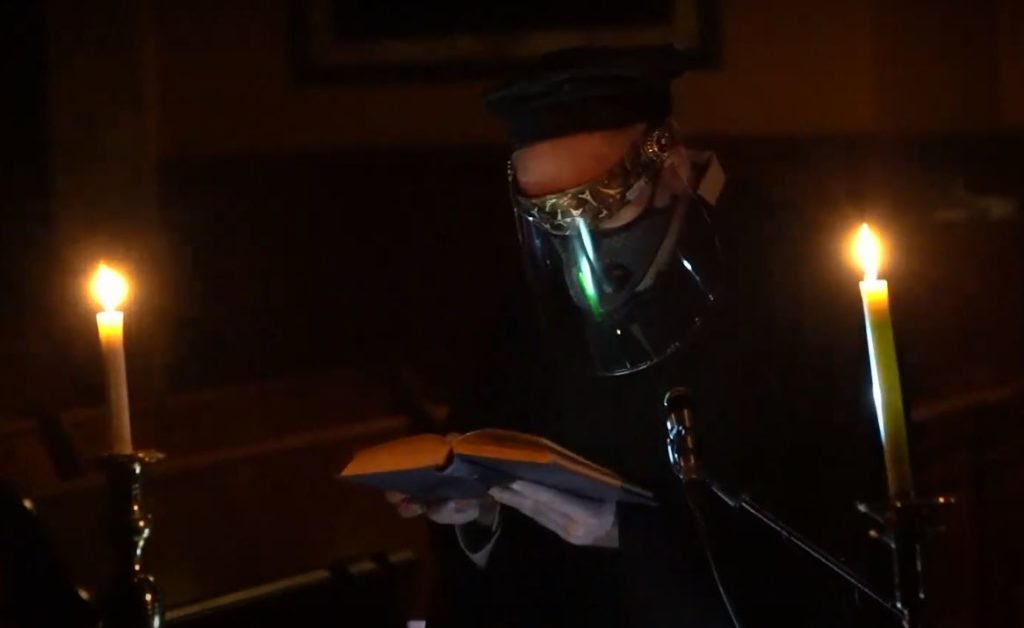
Hazzan Rabbi Ira L. Rohde, Shearith Israel, NYC, 29 July 2020
The Fast of Ab services as conducted at Shearith Israel (The Spanish & Portuguese Synagogue of New York) are uniquely dramatic and moving. The service is conducted in a darkened sanctuary. The traditional Western Sephardic melodies chanted for the Book of Lamentations and for the Kinot (elegies) are incredibly beautiful and emotionally moving. In most years large crowds fill the room for an experience that is unlike any other. In 2020, with the help of the ASF, Shearith Israel’s Fast of Ab services, together with a special lecture by Rabbi Meir Soloveichik, were presented via live-stream from the sanctuary.
~~~~~~~
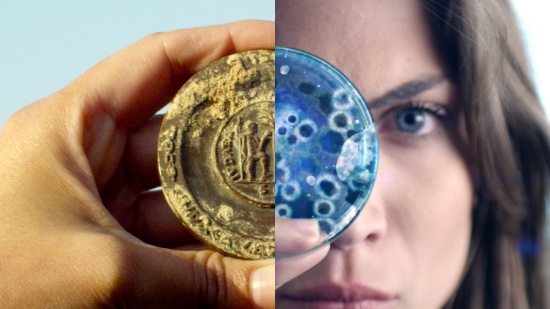
Photo Credit: “Israel – Spirit of Creativity” (Screenshot courtesy of Israel)
~~~~~~~
Upcoming Events or Opportunities
Upcoming Events or Opportunities
The American Sephardi Federation’s Sephardi House Fellowship is a unique learning, community-building, and leadership development program that infuses the diversity, creativity, and vibrancy of the Sephardic spirit into Jewish student life—while also advancing Jewish unity and vitality on campus.
Bringing together a select cohort of Jewish students from colleges across the United States, our program is the only national yearlong fellowship dedicated to deepening a sense of Jewish belonging through an immersion in the multifaceted history, cultures, and wisdom of the Sephardic and Mizrahi world.
For more information about ASF’s Sephardi House Fellowship, visit: www.sephardi.house

Apply Now!
Application Deadline: 8 August 2025, 5:00PM ET
For questions email the National Director of Sephardi House, Ruben Shimonov (ruben@americansephardi.org) and CC Sephardi House Engagement Associate, Stella Salmon (Salmon@americansephardi.org).
~~~~~~~
Our friends at LESJC in partnership with the American Sephardi Federation, and Congregation Mickve Israel present:
Virtual Tour of Savannah’s Historic Mickve Israel Synagogue
Shalom y’all! Join us for an exclusive virtual tour of America’s third oldest Jewish Congregation and the only neo-Gothic synagogue in the United States. In 1733, a group of mostly Spanish & Portuguese Sephardic Jewish immigrants arrived in Georgia from England, where they had found refuge from the horrors of the Inquisition. Bringing with them a Torah scroll from London’s Bevis Marks, the group settled in Savannah and founded Mickve Israel, the state’s first synagogue, in July 1735. Construction of the sanctuary began in 1876 and was completed in 1878. New York architect Henry G. Harrison pure neo-Gothic design reflected the fashionable architecture of the Victorian era. Congregation Mickve Israel was named one of the “15 Most Beautiful Synagogues in the World” by Condé Nast Traveler and rated among the “15 BEST Things to Do in Savannah” by Trip Advisor.
Sunday, 3 August, 11:00 AM 12:30 PM
Sign-up Now!
Tickets: $10

About the guide:
Your guide for this tour will be Rabbi Robert Haas, a native of McAllen, Texas, who became the 14th spiritual leader of Congregation Mickve Israel in Savannah, Georgia, in 2012. After receiving his B.S. from the University of Texas at Austin, he began his first career as an elementary school teacher before matriculating at Hebrew Union College in Jerusalem and Los Angeles, where he earned his Master’s Degree and Rabbinical Ordination. After graduation, he served as an associate rabbi in Dallas and in Houston, Texas. He then spent a year volunteering in Africa with American Jewish World Service before moving to Savannah. Rabbi Haas is a sought-after comedian, lecturer, preacher, and interfaith leader, regularly speaking and performing for organizations, radio shows, colleges, theaters, houses of worship, and institutions.
~~~~~~
The Sephardic Rabbinic Conference in partnership with the American Sephardi Federation, Habura, Sephardic Jewish Bortherhood of America, and TriBeCa Synagogue present:
An Evening of Sephardic Music & Celebration
Join us for an unforgettable evening of Sephardic hazzanut, Torah, and Piyyutim with visiting Sephardic hazzanim and Hahamim from around the world!
This special evening is a part of the Sephardic Rabbinic Conference, a new and exciting gathering of Sephardic community Rabbis in New York with partners from across the globe. Featuring keynote speaker Rabbi Joseph Dweck, Senior Rabbi of the S&P Sephardi Community of the United Kingdom, and six local and visiting Sephardic community Hazzanim of Syrian, Turkish, Moroccan, Spanish & Portuguese, and Persian heritage.
Sunday, 10 August, at 7:30 PM
Sign-up Now!
@Tribeca Synagogue – 49 White Street, NYC
Tickets: $36 Early Bird; $54 General Admission

~~~~~~
Our friends at Qesher in partnership with Nora Kaplan Learn-in-trips presents:
Jewish History Tours to Spain
BARCELONA-CORDOBA-GRANADA
SEVILLA-TOLEDO-MADRID
Embark on a 12-day journey this October and November 2025 to experience the history of Jews in Sepharad: explore museums and world heritage sites, walk through the old cobbled lanes of Jewish quarters, take in the splendid architecture, and enjoy delicious food and Spanish wine.
Learn about the Golden Age of Jewish life in Spain on this unique, family-run Jewish Heritage Tour.
26 October – 6 November, 2025
Early Bird Price: EUR 5,700 if booked by 26 July, 2025
For questions or more information, please visit www.norakaplan.com or email alexis.learnintrips@gmail.com.
Note: While this is not an ASF program, the American Sephardi Federation is proud to serve as a promotional partner for this unique educational experience.
